
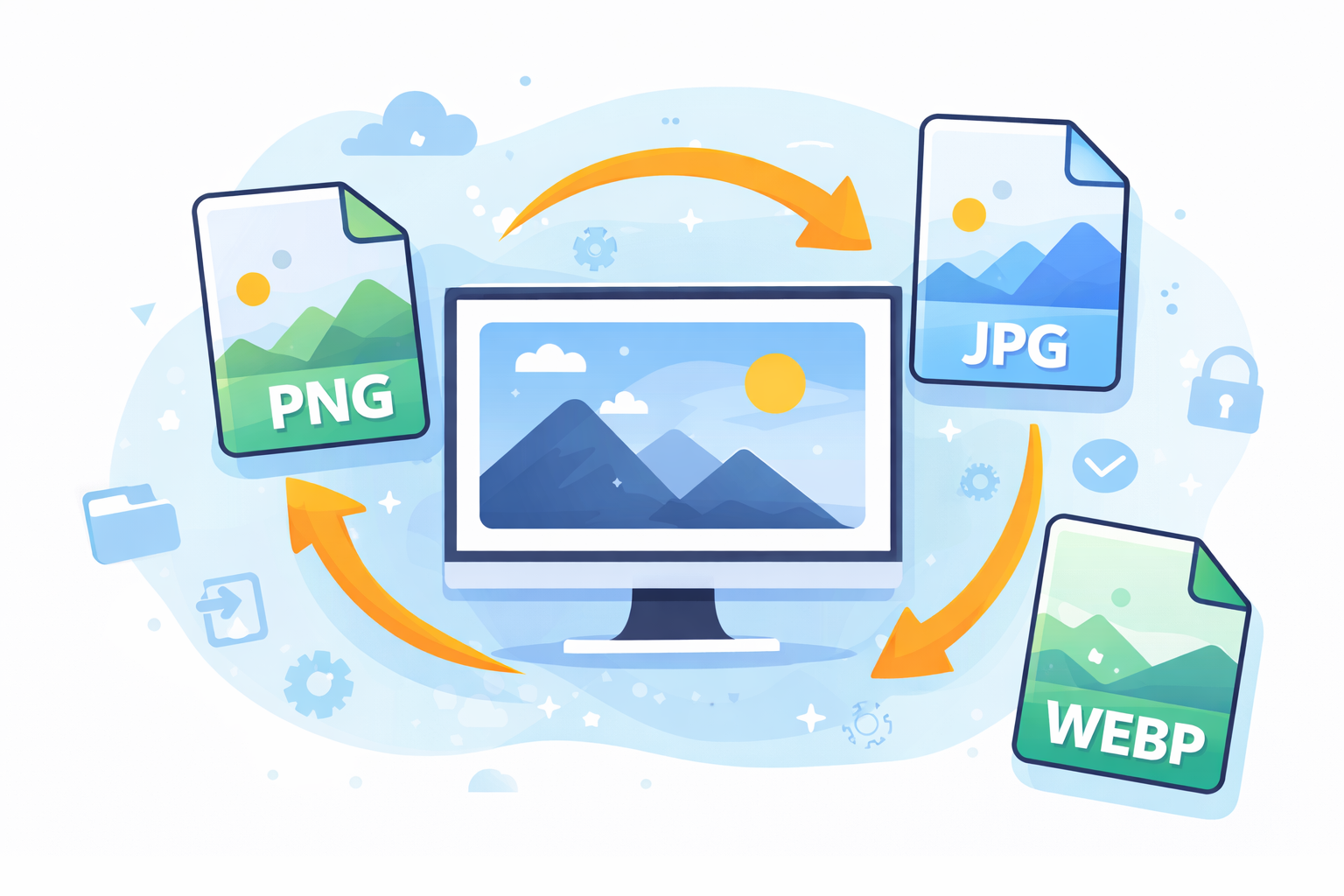
Introduction: Why Choosing the Right Image Format Matters
Images play a major part in the modern digital content. From blogs and websites as well as social media and online store posts images can draw attention and convey ideas swiftly. But, many overlook an important element: the format of images.
This is precisely why why choosing the best Image Format is Important is a crucial issue for anyone creating digital content.
The wrong format may slow down your site, decrease the quality of your images, harm SEO rankings and cause an unsatisfactory user experience. However selecting the right format can speed up your website and reduce the size of files and ensure that your images appear sharp across any device.
For instance for example, for instance, a PNG image that is used when a JPEG is required can increase file size by a few megabytes. Add that to the dozens of images on a page and suddenly your website loads considerably slower.
Search engines also consider the speed of websites as well as user experience. Images that are large can have a negative impact on Core Web Vitals, which could affect the rankings of search engines.
In simplest terms, the proper image format is helpful:
- Improve website performance
- Maintain image quality
- Reduce bandwidth and storage usage
- Enhance user experience and increase SEO
This guide will cover everything you should be aware of How to choose the best Image Format is Crucial and includes different kinds of images, their applications and tools, common blunders and the best methods.
Understanding Image Formats
Images are formatted according to the way in which photos are managed, stored and presented. Each format has distinct features designed to suit different usage situations.
Certain formats concentrate specifically on quality Some focus on quality, while others are focused are focused on compression while some are specifically designed to be used for animation or transparency..
The most commonly used formats online are:
- JPEG / JPG
- PNG
- GIF
- WebP
- SVG
- AVIF
Each format employs a distinct method of storage and compression. Knowing the differences is crucial to selecting the correct format.
For instance:
| Format | Best Use | Compression Type |
|---|---|---|
| JPEG | Photographs | Lossy |
| PNG | Transparency and graphics | Lossless |
| GIF | Simple animations | Lossless |
| WebP | Modern web images | Lossy/Lossless |
| SVG | Vector graphics and icons | Vector |
If you are aware of these formats, you will be able to make better decisions about how images are displayed on the internet.
Types of Image Formats and Their Uses
JPEG (Joint Photographic Experts Group)
JPEG is among the most popular images formats available on the internet.
It employs Lossy Compression which decreases the files’ size by removing certain images’ data. This is ideal for images that are complex and with a wide range of shades.
Advantages
- Small file sizes
- Great for photos
- All platforms are supported
Disadvantages
- Quality decrease after compression
- Not appropriate for transparency
JPEG is widely used for:
- Blog images
- Photography
- Product images
- Banners on websites
PNG (Portable Network Graphics)
PNG is an unalterable format which means it preserves the image’s data in tact.
This format is great for images that need clear edges or transparency.
Advantages
- Images of high-quality
- Promotes Transparency
- Perfect for logos and graphics
Disadvantages
- File sizes that are larger than JPEG
PNG is often used to describe:
- Logos
- Icons
- Graphics for the UI
- Screenshots
GIF (Graphics Interchange Format)
GIF is well-known for its capability to handle simple animations.
While it can only support the 256 colors, it is well-known for its quick looping animated videos.
Advantages
- Animation support
- Small files for images that are simple
Disadvantages
- Limited color range
- Lower image quality
GIF is frequently used to describe:
- Animated memes
- Small graphic
- Reaction images
WebP (Modern Web Format)
WebP is a new format created by Google.
It provides better compression when as compared with JPEG and PNG while preserving the highest quality of images.
Advantages
- Smaller file sizes
- Supports animation and transparency
- More compression
Disadvantages
- Some compatibility issues with older browsers.
WebP is becoming increasingly the most popular format for websites.
SVG (Scalable Vector Graphics)
SVG images are vector-based, instead of pixels-based.
This means that they can be scaled indefinitely, without compromising quality.
Advantages
- Infinite scalability
- Very tiny size of files
- Ideal for illustrations and icons
Disadvantages
- Not appropriate for photographs with a lot of detail.
SVG is commonly employed for:
- Web icons
- Logos
- Infographics
Why Choosing the Right Image Format Matters for SEO
Search engines favor websites that load quickly.
Photos that are overly big or poorly optimized may cause your website to slow significantly.
This is the point at which the importance of choosing the correct Image Format is vital for SEO.
Correct image formats aid in:
1. Faster Page Load Speed
Search engines favor faster websites.
Images with smaller sizes reduce loading times, increasing the performance and ranking.
2. Better Mobile Performance
Mobile users typically have lower internet speeds.
Optimized images ensure faster loading on mobile devices.
3. Improved Core Web Vitals
Google utilizes Core Web Vitals to measure the experience of users.
Large images can adversely impact:
- Largest Contentful Paint (LCP)
- First Input Delay (FID)
- Cumulative Layout Shift (CLS)
You can find out more about Google standards for performance here:
https://web.dev/vitals/
4. Lower Bounce Rate
Fast-loading pages keep visitors engaged.
The slow loading of images could make users leave the page before the page has finished loading.
Impact on Website Performance
Images make up more than 50% of all webpage sizes.
The choice of the best format dramatically reduces the page’s weight.
For instance:
| Image Format | Average File Size |
|---|---|
| PNG | 1.2 MB |
| JPEG | 600 KB |
| WebP | 350 KB |
The difference may seem insignificant However, across hundreds of images, it accumulates quickly.
Speedier pages result in:
- Higher engagement
- Better search rankings
- Improved user satisfaction
Common Mistakes When Choosing Image Formats
Many website owners make minor mistakes that can negatively impact performance.
Using PNG for Photographs
PNG files are bigger than JPEG for photos.
This is a waste of bandwidth and can cause slow loading times.
Uploading Full Resolution Images
Directly uploading photos directly from cameras, without compression can result in large files.
Ignoring Modern Formats
Formats such as WebP and AVIF provide superior compression, however they are often overlooked.
Not Optimizing Images
Images should be optimized prior to uploading.
Best Tools for Image Optimization
Utilizing the correct tools makes the process of optimizing images much simpler.
1. TinyPNG
A widely used compression tool that can reduce file size, while preserving the quality.
2. Squoosh
A tool for image compression that is free created by Google.
3. ImageOptim
Excellent option for Mac users who are looking for more advanced options for optimization.
4. Photoshop Export for Web
Lets creators select the most suitable setting for compression and format.
Best Practices for Selecting Image Formats
For optimal results, you must follow these easy steps.
Use JPEG for Photos
Photos generally work best using JPEG compression.
Use PNG for Transparency
If your image needs a transparent background, go for PNG.
Use WebP for Websites
Modern websites should be focusing on WebP for improved performance.
Use SVG for Icons
Vector graphics are great for icons and logos.
Compress Before Uploading
Reduce the size of your images prior to uploading it to your website.
Future of Image Formats
Technology is constantly evolving while new designs are getting sought-after.
One format that is promising is the AVIF format It offers more compressibility than WebP.
Benefits include:
- Greater compression efficiency
- Better color handling
- Smaller file sizes
As browser support grows, AVIF may become the new standard for web-based images.
Frequently Asked Questions (FAQs)
1. What is the ideal image format for web pages?
WebP is one of the most popular formats since it is a great compression format and high quality.
2. Is PNG better than JPEG?
It is dependent on the usage situation. PNG is better suited for transparency and graphics, while JPEG is more suitable for photos.
3. Does image format affect SEO?
Yes. Image format influences file size and page speed, which affects and search engine ranking.
4. Should I convert images to WebP?
Yes, the conversion of images to WebP can dramatically reduce the file size, without sacrificing quality.
5. When should I use SVG images?
SVG images are perfect for logos, icons and other graphics that must scale with no loss of quality.
6. What is the smallest image format?
WebP and AVIF typically create the smallest files, and still maintain high quality images.
Conclusion
Knowing why choosing the right Image Format is vital for anyone running a blog, website or blog as well as a store.
The correct image format can improve:
- Speed of the website
- User experience
- SEO performance
- Storage efficiency
JPEG, PNG, WebP, SVG, and other formats have different functions. If you know these formats’ strengths and limitations, you’ll be able to make better choices that can benefit your customers as well as the search engine rankings.
In the current digital age of rapid-paced change optimizing images isn’t a luxury it’s an absolute necessity. Selecting the best format will ensure that your content is stunning while loading quickly on any device.