
Introduction
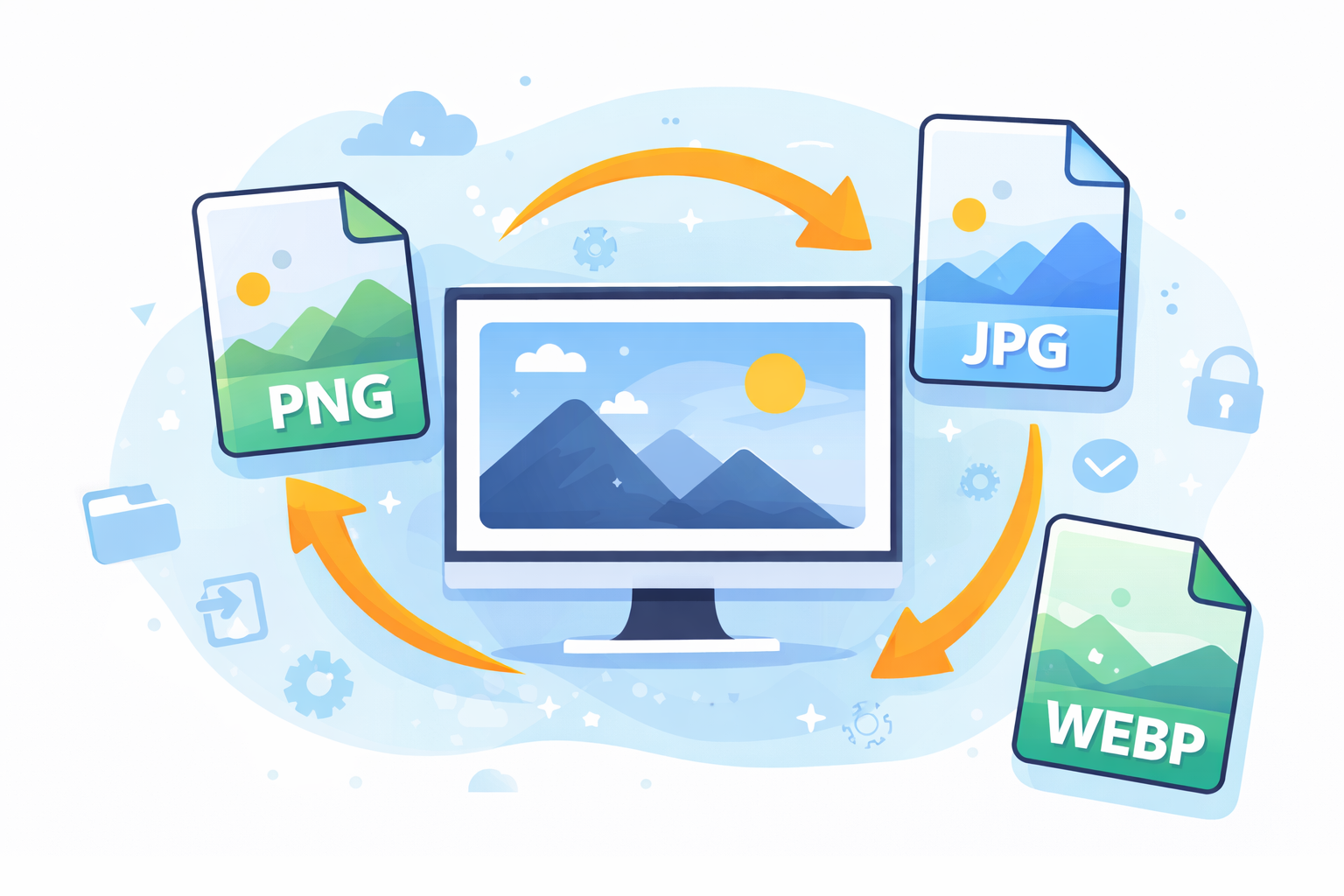
Images are everywhere: on websites and social media, in documents, and presentations. However, sometimes you’ll need to convert images between formats. For instance, you may prefer to change the PNG to an JPEG or convert the HEIC file to an image format that is more compatible with JPG.
Knowing how to convert Image files quickly and easily can help save time, cut down on file size and increase compatibility between various platforms. If you’re a blogger designer student, an owner of a business being able to convert image formats effectively is an important knowledge.
The positive side? Image conversion is simpler than ever before. With the latest tools that allow you to convert images within a matter of minutes without sacrificing quality.
Through this book, discover:
- What is the definition of image conversion?
- The importance of image formats
- The most efficient methods of converting images.
- The most effective free tools and software
- Common errors to avoid
- Pro tips for maintaining image quality
Let’s get started.
What Image File Conversion Means
Image conversion refers to the method of changing an image from one format to another format.
For instance:
| Original Format | Converted Format | Purpose |
|---|---|---|
| PNG | JPG | Smaller file size |
| HEIC | JPG | Device compatibility |
| WEBP | PNG | Editing compatibility |
| TIFF | JPG | Web optimization |
Each format has its own function. Some are focused on compression while others are able to maintain the highest quality.
In the event that you transform an image you are basically recoding the file by using a different compression technique.
Common Image File Formats
Understanding formats will help you choose the best method of conversion.
JPEG (JPG)
- Ideal for photography
- Small file sizes
- Widely appreciated
- Uses lossy compression
PNG
- The best choice for logos and graphics.
- Helps to promote Transparency
- Higher quality, but larger files
GIF
- Animation is supported
- Limited color palette
- Common Web graphics
WEBP
- Modern web format
- Excellent compression
- Less Than JPG and PNG
HEIC
- A default format for many smartphones
- High-end
- Smaller file sizes
Each format has its advantages based on your requirements.
Why You Might Need to Convert Image Files
There are a variety of reasons why that people change images.
1. Reduce File Size
Large images slow websites and consume storage space.
Converting PNG into JPG can cut down on file size by as much as 70 percent.
2. Improve Compatibility
Some platforms do not support certain formats.
For instance:
- HEIC could not be opened on computers that are older
- WEBP might not work with older versions of software
3. Optimize Images for Websites
Search engines favor fast-loading pages. Smaller images help improve page speed.
4. Prepare Images for Printing
Formats with high resolution like TIFF are ideal for printing professional.
Best Methods for How to Convert Image Files Quickly and Easily
There are a variety of efficient and secure methods to transform images.
1. Online Image Converters
Convert online is the simplest method.
Some of the most popular choices are:
- CloudConvert
- Convertio
- ILoveIMG
- Online-Convert
Steps:
- Upload your photo
- Choose the output format
- Click to convert
- Download the file
Advantages:
- No installation required
- Works with any device
- Rapid conversions
Disadvantages:
- Internet connection is required.
- Limits on file size may apply.
2. Using Built-in Computer Tools
Your computer might already be equipped with image conversion capabilities.
Windows (Paint):
- Open the image in Paint
- Click File – Save As
- Choose the appropriate format (JPG PNG, JPG, or BMP)
Mac (Preview):
- The image can be opened in the Preview window.
- Click File – Export
- Select the format you wish to use.
This is among the most effective ways to learn how to convert Images Quickly and Easily without any additional software.
3. Using Photoshop or Image Editing Software
Professional software gives you sophisticated control.
The most popular programs include:
- Adobe Photoshop
- GIMP
- Affinity Photo
Steps:
- Open the image
- Click Export or Save As
- Select the format you prefer.
- Adjust the quality settings
Advantages:
- Quality output
- Control of compression
- Processing in batches
4. Batch Image Conversion Tools
If you have to convert a lot of photos, using batch software can can save time.
The most popular batch convertors are:
- XnConvert
- ImageMagick
- FastStone Photo Resizer
Benefits:
- Convert thousands of images at one time
- Apply compression settings
- Rename files automatically
5. Mobile Apps for Image Conversion
You can also convert images directly from your smartphone.
Common applications are:
- Image Converter (Android)
- The Image Converter (iOS)
- File Converter apps
These apps are ideal for quick editing while on the go as well as remote work.
Step-by-Step Example: Converting PNG to JPG
Let’s look at a quick example.
Step 1: Choose your converter
Step 2. Transfer your PNG image
Step 3. Choose JPG as the output
4. Change the quality setting
5. Get the image converted
The procedure usually lasts less than 10 seconds.
Tips to Maintain Image Quality During Conversion
Image quality may decrease If the conversion settings aren’t correct.
Check out these guidelines:
1. Use High Quality Compression
Avoid settings that are of low quality.
2. Convert High-Quality Formats to Compatible Formats
Example:
PNG – JPG works great.
But converting JPG – JPG repeatedly reduces quality.
3. Keep Original Files
Always keep an original copy in case you require it later on.
4. Avoid Multiple Conversions
Repeated conversions can degrade image quality.
Common Mistakes When Converting Images
Many novices accidentally harm their images when they convert.
and building healthy habits is a list of the top frequently made errors.
1. Using the Wrong Format
Example:
The saving of a logo in JPG eliminates the transparency.
PNG is a better format for graphics.
2. Over-Compression
High compression can lead to:
- Images that are blurry
- Pixelation
- The loss of details
3. Ignoring Resolution
Prints with lower resolution can be damaged by low resolution images.
For printing:
Use 300 DPI resolution.
4. Forgetting Metadata
Some converters remove image metadata such as:
- Camera settings
- GPS data
- Creation date
Best Free Tools for Image Conversion
practical tips you can apply in everyday life. From boosting confidence are some trusted tools to test.
| Tool | Type | Best For |
|---|---|---|
| GIMP | Desktop | Editing for free |
| XnConvert | Desktop | Batch conversion |
| CloudConvert | Online | Rapid conversions |
| Convertio | Online | Multiple formats |
| ILoveIMG | Online | Simple tools |
You can check out CloudConvert here:
https://cloudconvert.com/
How to Convert Image Files Quickly and Easily for Websites
Website optimization requires special attention.
Use these suggestions:
Use Modern Formats
WEBP images load more quickly.
Compress Before Upload
Utilize compression tools to reduce the size of files.
Resize Images
Don’t upload large images if your website has smaller versions.
Use Lazy Loading
Lazy loading increases page speed as well as user satisfaction.
Advanced Image Conversion Techniques
Advanced users may require more control.
Command Line Conversion
Tools such as ImageMagick can be automated.
Example command:
convert image.png image.jpg API Image Conversion
Developers can automate the conversion of images through APIs that are integrated into web-based applications.
Automated CMS Plugins
Platforms such as WordPress are able to convert images into optimized formats.
Frequently Asked Questions (FAQs)
1. What is the most efficient method to convert an image?
Online converters are generally the fastest choice. Upload the image, select the format and download the final result in just a few just a few seconds.
2. Does converting images reduce quality?
Sometimes. Formats with lossy quality such as JPG compress data and can lower quality in a small way.
3. Can I convert multiple images at once?
Yes. Batch converters such as XnConvert let you convert hundreds of images at once.
4. Which format is best for websites?
WEBP is among the most popular formats for websites since it is high-quality and has smaller size files.
5. How do I convert HEIC to JPG?
Online conversion tools, Mac Preview, or Windows tools for conversion to convert HEIC files to JPG.
6. Is image conversion safe online?
Yes, provided you use reliable tools. Avoid uploading sensitive images to websites that are not known.
Conclusion
Understanding how to convert Image files quickly and easily is a crucial ability in the digital age. When you’re optimizing images to be used on websites, or preparing images for printing, or simply converting images to work across different devices, the best tools will make it easy.
It is possible to convert images with the help of:
- Online converters
- Computers built-in
- Professional software
- Batch conversion software
- Mobile apps
The trick is selecting the best format to meet your needs, and preserving the image quality.
If you follow the guidelines in this article – staying clear of common mistakes and using dependable tools, you can easily convert images effectively and without losing crucial particulars.
If you master these techniques, you’ll be able to produce better, more professional photos each time.