
Introduction
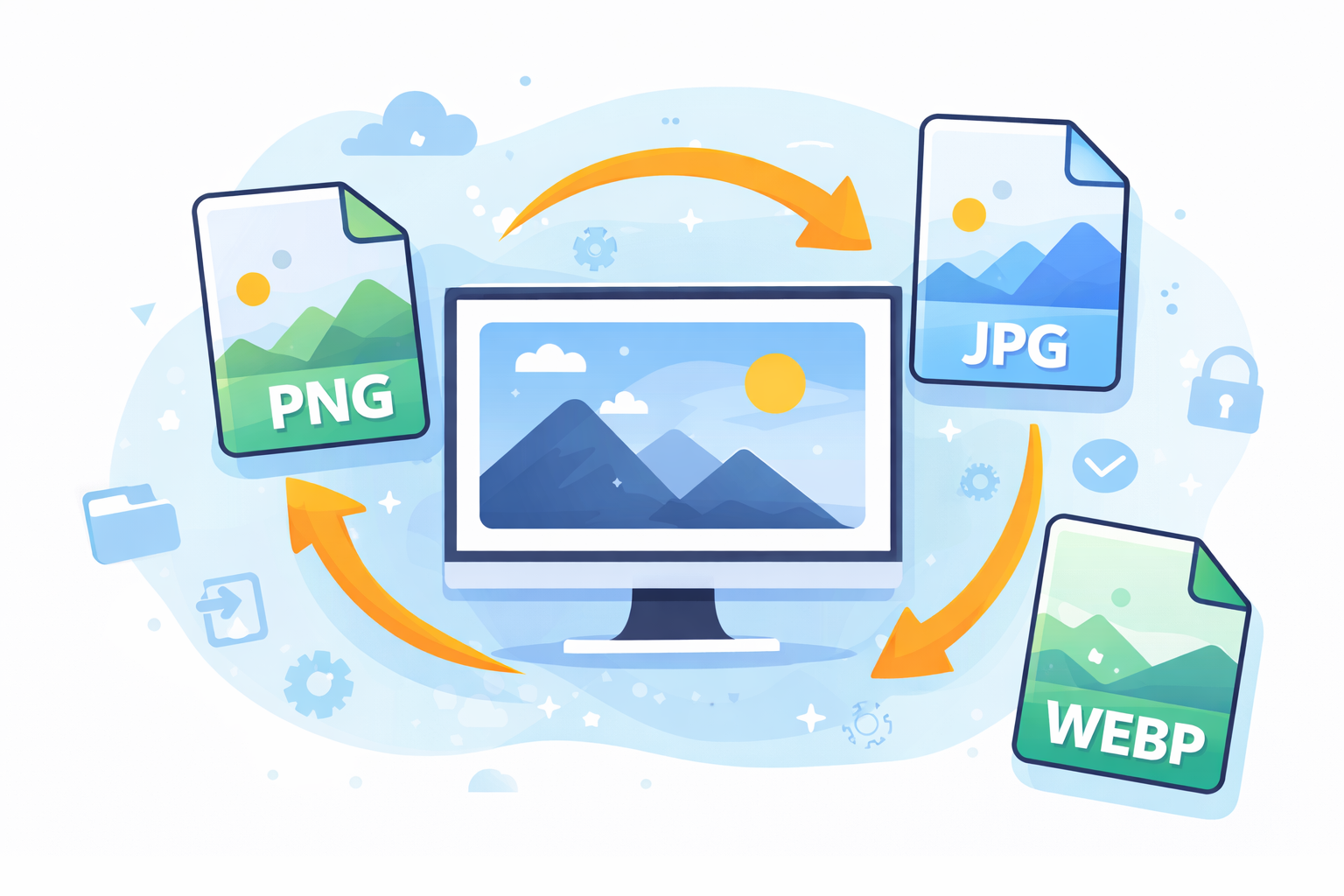
If you use images for social media, websites designs, presentations or other purposes, you’ve likely needed to convert images into a different format. Perhaps you required an image in PNG image instead of JPG or perhaps a WebP image to speed up your websites.
The process of learning how to change image Formats in a matter of seconds will save you time, enhance the quality of your images, and make your files compatible with a variety of platforms.
The best part? There is no need for expensive software or sophisticated technical knowledge. Nowadays, there are many simple and fast methods to convert images with online tools, applications or built-in functions on your personal computer.
This guide will help you be able to:
- What formats for images are there?
- The importance of format conversion
- The most efficient methods to convert images
- The best free tools readily available
- Common errors to avoid
- Professional tips to ensure the high standard of
Let’s take a dive.
Understanding Image File Formats
Before you can learn how to change image Formats in seconds It is important to know what the various formats for images actually mean.
An image format determines:
- How images are how it is
- Size of the file
- Method of compression
- Support for transparency
- Compatibility
Most Common Image Formats
| Format | Best Used For | Key Feature |
|---|---|---|
| JPG / JPEG | Photography | Small size file |
| PNG | Transparency and graphics | Lossless quality |
| WebP | Websites | Quality, small size |
| GIF | Simple animations | Limited colors |
| SVG | Logos & icons | Vector format |
| BMP | Raw image storage | Large size |
Each format serves an distinct reason for it and that’s the reason why conversion is usually required.
Why You Might Need to Change Image Formats
There are a variety of reasons why for people to convert images.
1. Reduce File Size
Large images can slow down email and websites.
Converting PNG to either WebP or JPG typically reduces the size drastically.
2. Improve Website Performance
Modern formats such as WebP are faster to load.
Faster images refer to:
- Better SEO
- Better user experience
- Scores for faster page speeds
3. Platform Compatibility
Certain platforms will only accept certain formats.
Examples:
- Websites prefer JPG, PNG, WebP
- Print prefers TIFF
- Logos typically make use of SVG
4. Enable Transparency
Only certain formats can support transparent backgrounds.
They include:
- PNG
- WebP
- SVG
How to Change Image Formats in Seconds Using Online Tools
One of the most efficient methods is to make use of web-based converters.
These tools do not require installation and operate directly within your browser.
Step-by-Step Method
- Upload your photo
- Select the latest format
- Click to convert
- Download the file
Most conversions last no more than five minutes.
Popular Online Image Converters
| Tool | Features |
|---|---|
| CloudConvert | Supports various formats |
| Convertio | Simple and quick |
| TinyPNG | Conversion and compression |
| Online-Convert | Advanced options |
These tools are compatible with tablets, mobiles or on a desktop.
For instance, you could make use of converters that are free, such as
https://cloudconvert.com for quick image format conversion.
How to Convert Image Formats Using Built-In Computer Tools
There is no need for online tools.
The majority of computers have built-in solutions.
Windows – Using Paint
Steps:
- Right-click image
- Paint is open with Paint
- Click File – Save As
- Choose the appropriate format (JPG PNG, JPG, BMP GIF)
Conversion requires only a couple of seconds.
Mac – Using Preview
Steps:
- Open image within Preview
- Click File – Export
- Select the format you prefer
- Save
Mac supports formats such as:
- JPG
- PNG
- HEIC
- TIFF
Best Free Software for Image Conversion
If you are working with images frequently using software that is dedicated to this, it will make your life easier.
Top Free Tools
1. GIMP
A powerful image editor that is open source and free.
Features:
- Conversion to format
- Image editing
- Compression tools
2. IrfanView
Very quick image viewer and converter.
Benefits:
- Batch conversions
- Lightweight
- Supports various formats
3. XnConvert
It is ideal for the conversion of many images simultaneously.
Supports:
- 500plus formats
- Batch resizing
- Metadata editing
Batch Converting Images to Save Time
If you own hundreds or even dozens of images that you want to convert, doing it one by one isn’t efficient.
Batch conversion lets you convert many images at the same time.
Benefits
- Reduces the time spent at work
- Maintains file names organized
- Automates repetitive tasks
Example Workflow
- Upload multiple images
- Select the the output format
- Apply settings
- Convert all your files
Tools such as the XnConvert as well as IrfanView can convert hundreds of images in just a few seconds.
Best Formats for Different Use Cases
The choice of the correct format is just as as the process of converting it.
For Websites
The best formats:
- WebP
- JPG
- PNG
Why?
They are able to balance both speed and high quality..
For Photography
The best format is:
- JPG
It includes:
- Good compression
- Small size file
- High compatibility
For Logos & Graphics
The best formats:
- PNG
- SVG
They maintain sharp edges and a clear appearance.
Common Mistakes When Converting Image Formats
While converting images can be easy, mistakes can result in quality problems or compatibility problems.
1. Repeated JPG Compression
Each JPG save reduces quality.
Avoid converting:
JPG – JPG – JPG
2. Choosing the Wrong Format
Example:
Utilizing PNG to upload photos can result in large files.
3. Ignoring Image Resolution
Format changes do not improve resolution..
Low-resolution images are still of low quality.
4. Removing Transparency Accidentally
JPG is not transparent.
If you convert PNG to JPG backgrounds will turn white.
Advanced Tips for High-Quality Image Conversion
and building healthy habits are the best tips that professionals employ.
1. Convert PNG to WebP for Websites
WebP can reduce image size by 30 to 50 percentage.
2. Use Lossless Compression When Needed
Logos and graphics Avoid quality loss.
Use:
- PNG
- SVG
- Lossless WebP
3. Keep the Original File
Always save the original image when you convert.
This lets you change your mind without losing quality.
4. Resize Before Converting
Reducing large images can reduce the size of files dramatically.
Example:
Images of 4000px to 1200px for web pages.
Mobile Apps That Convert Image Formats Instantly
If you’re on your phone, there are several applications that can quickly convert images.
Top Mobile Apps
Android
- Image Converter
- Photo Resizer
- File Converter
iPhone
- The Image Converter
- JPEG PNG Image File Converter
- Documents by Readdle
The majority of apps allow:
- Batch conversion
- Resizing
- Compression
How to Change Image Formats in Seconds for SEO
Images influence rankings on websites.
A proper image optimization technique can help make it easier to:
- Page speed
- User experience
- SEO performance
SEO Image Optimization Checklist
Convert photos to WebP
Compress large images
Use descriptive filenames
Add alt text
Resize the file before uploading
Search engines favor speedy loading websites which is why optimized images can make a huge impact.
FAQs
1. What is the most efficient method of changing the format of an image?
The online converters are typically the most speedy. Simply upload your image to the site, select an option for the format, then download the file converted in minutes.
2. How can I change images and not lose quality?
Yes. You can use format that is lossless like TIFF, PNG as well as lossless WebP to ensure the quality of the image.
3. What format is ideal for websites?
WebP is among the top formats for websites since it provides superior quality while reducing size files.
4. Can I transform multiple images at one time?
Yes. Tools such as ConvertXn, IrfanView and numerous online converters support batches of conversion.
5. Does converting image format change resolution?
No. Converting to a format doesn’t increase resolution. The dimensions of the pixels are the same.
6. Are online image converters safe?
Most trusted converters are safe. However, do not upload sensitive or confidential images.
Conclusion
Understanding how to switch image formats in a matter of seconds is an important ability for anyone working in the field of digital image. No matter if you’re a designer marketer, blogger or a casual user, speedy image conversion can to improve compatibility, decrease the size of your files and boost performance.
Modern tools, both offline and online–you can transform images quickly. From basic tools built into the system like Paint and Preview to advanced converters like CloudConvert and XnConvert There are a lot of options.
Remember the most important tips:
- Select the appropriate structure for the job.
- Do not compress repeatedly.
- Optimize images for better web performance
- Save original files in case of future conversions
By following these top methods, you’ll be able to transform pictures quickly, securely and without sacrificing quality..