
Introduction
In the digital age images play an important role in marketing, communication education, as well as the creation of content. If you’re a blogger student, designer or a business owner, there are times when you require images in various formats. This is the point at which the advantages of using online image converter tools are made clear.
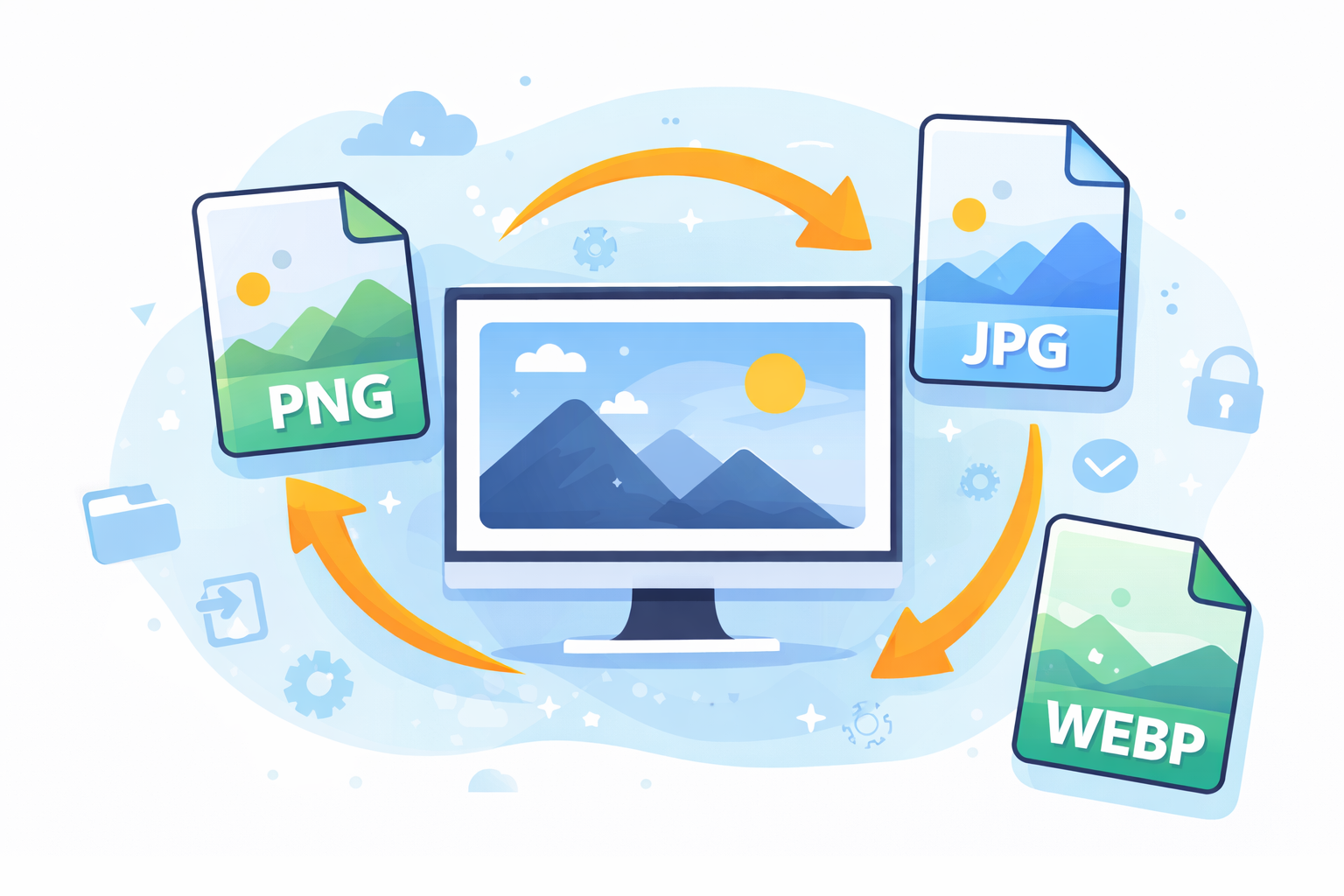
Online image converters allow users to swiftly convert pictures from one type to the next without the need for any program. For instance, you can quickly convert JPG to PNG, HEIC to PNG, or WebP to JPG in minutes. These tools are generally available for free on every device and require only technical expertise.
As apps, websites and devices are able to support various formats of files, the need to convert images is necessary for compatibility and efficiency. Online converters speed up this process drastically.
The article we’ll look at the benefits of using online Image Conversion Tools which will explain how they increase efficiency, decrease file size improve the compatibility of workflows, and make it easier to streamline workflows. We will also look at the common mistakes that people make when they convert images, suggest helpful tools, and address frequently requested questions.
What Are Online Image Converter Tools?
Online image converters are web-based software that allows users to modify the format of images without the need to install software on their personal computer. They work directly in the web browser and can provide a range of formats like JPG, PNG, WebP, GIF, BMP, TIFF, and HEIC.
Most converters adhere to a basic procedure:
- Send an image to upload.
- Choose the output format you want to use.
- Click to convert.
- Download the image that has been converted.
Since they are online-based These tools remove the need for large software programs, such as graphics editing suites.
Common Image Formats Supported
| Format | Description | Best Use |
|---|---|---|
| JPG | Compressed Image Format | Social media, websites |
| PNG | HD images of high-quality with transparent | Logos, graphics |
| WebP | Modern compression format | Web optimization |
| GIF | Images animated | Animations, memes |
| TIFF | Professional images of high-quality. | Photography and printing |
| BMP | Images that are not compressed | Windows systems |
The ease of use and accessibility of these tools makes them perfect for users of all ages and professionals too.
The Benefits of Using Online Image Converter Tools
Understanding the benefits of using the Online Image Converter Tool can assist people and companies optimize their digital workflows in a significant way.
1. No Software Installation Required
One of the main benefits is the convenience. Because these tools function in your browser, you don’t have to install any software.
Benefits include:
- Storage space is saved
- Works with any device
- No issues with compatibility of the system.
- Instant access
No matter if your device is Windows, macOS, Linux or even a phone online converters function flawlessly.
2. Fast and Time Efficient
Speed is a further advantage. The majority of online image converters convert files in just a few minutes.
Instead of opening a large program such as Photoshop You can convert images in a flash by uploading the image.
This is especially useful when working with many images.
3. Cross-Device Accessibility
Online tools work on all devices, so you can convert images with:
- Desktop computers
- Laptops
- Tablets
- Smartphones
All you require you have internet access as well as an internet browser.
This makes them great for students, remote workers and digital creators.
4. Supports Multiple File Formats
A lot of online converters can support hundreds of image formats. This makes them very versatile.
For instance, you could change:
- PNG to JPG
- JPG to WebP
- HEIC to PNG
- GIF to MP4
- TIFF to JPG
This wide compatibility lets users to create images for presentations, websites printing, mobile devices.
5. Helps Optimize Images for Websites
Performance of websites is heavily dependent on the image optimization. Large images make it difficult to load pages.
Online converters can reduce the size of files by changing images into optimized formats, such as WebP and compressed JPG.
Benefits include:
- Faster page loading
- Improvement in SEO performance
- Better user experience
- Utilization of bandwidth is reduced
Optimized images are crucial for modern websites.
6. User-Friendly Interfaces
The majority of converters are made with ease in the mind. Anyone can convert images with no technical expertise.
The most common interfaces are:
- Drag-and-drop upload
- Simple choice of format
- One-click conversion
- Instant download
This user-friendly interface allows online converters to be accessible to all.
7. Many Tools Are Free
Another benefit is cost. Numerous trustworthy image converters are free.
A few popular options include extra features, such as:
- Batch conversion
- Advanced compression
- Cloud storage integration
But, the basic features of conversion are generally provided for free.
Popular Online Image Converter Tools
Many tools stand out because of their reliability and efficiency.
CloudConvert
CloudConvert can handle over 200 formats of files and provides top-quality conversions.
Features:
- Processing of batches
- API integration
- Advanced image settings
Find out more about it here:
https://cloudconvert.com
Convertio
Convertio is popular because of its easy-to-use interface and broad format support.
The key features are:
- Uploads via drag-and-drop
- Cloud storage support
- Speedy conversion speeds
Online-Convert
Online-Convert is a powerful tool for customizing your conversion.
Users are able to:
- Adjust image resolution
- Compress files
- Change color depth
This makes it ideal for use in professional cases.
ILoveIMG
ILoveIMG provides a range of image tools that go beyond conversion.
The highlights include:
- Image compression
- Resizing
- Watermarking
- Cropping
Common Mistakes When Using Image Converters
Although online converters are straightforward however, users frequently make errors that impact the quality of images or user-friendliness.
1. Choosing the Wrong Format
Different formats serve different purposes.
Examples:
- JPG to use for photos
- PNG to ensure transparency
- WebP to improve web page performance
If you use the wrong format, it can cause quality issues or increase file size without need.
2. Ignoring Compression Settings
A number of programs allow users to regulate the compression levels.
A lot of compression could cause:
- Images in a blur
- Pixelation
- The loss of details
Always check the results prior to downloading.
3. Uploading Very Large Files
Certain online converters have limits on file size.
Large files uploaded to the internet can:
- Processing is slow
- Cause upload errors
In these situations in these situations, desktop applications may be the better choice.
4. Using Untrusted Websites
Some online converters may not be secure. Some sites may keep uploaded images on their servers or display overly-advertising.
Always make use of trusted tools to safeguard your privacy and data.
Tips for Getting the Best Results
To get the most from the advantages of using the Online Image Converter Tool Use these simple steps:
- Select the appropriate format that is appropriate for your needs.
- Make use of WebP or JPG compressed for websites.
- Create backups of original images.
- Avoid extreme compression.
- Make use of batch conversions for larger projects.
- Make sure to check the output resolution prior to downloading.
These measures ensure top-quality images and also ensure ideal file sizes.
FAQs About The Benefits of Using Online Image Converter Tools
1. Are online image converters are safe to utilize?
Yes, the majority of trusted converters are secure. Make sure you choose reputable platforms and refrain from uploading sensitive images to untrusted websites.
2. Do online image converters reduce image quality?
Certain conversions can reduce the quality, particularly with strong compression. However, a lot of tools let users control the quality of their output.
3. Can I convert multiple images at once?
Yes. Many converters allow batch conversion, which allows users to convert multiple images at the same time.
4. Which image format is best for websites?
WebP is usually the most suitable format for websites since it allows for smaller file sizes, while still maintaining the highest quality.
5. Are online image converters free?
Many tools provide simple conversion options for no cost. Certain platforms offer premium plans that include additional options.
6. Can I convert images on my phone?
Yes. Online converters can be used on smartphones using web browsers, which makes it simple to convert images at any time.
Conclusion
Understanding the benefits of using online image converter tools will significantly enhance the way you handle digital images. These tools provide convenience and speed, as well as flexibility and are compatible across platforms and devices.
Instead of installing complicated software, users can swiftly convert images in just a couple of clicks. If you want to improve images for web pages, create images for printing or guarantee compatibility with other applications, online converters are the most efficient solution.
When you select the appropriate design, using trusted tools and avoiding common mistakes You can take full advantage of the benefits these tools can provide.
As the amount of digital content continues to expand and expand, digital image conversion software will be an essential tool for marketers, designers students, and all internet users. They streamline image management, reducing time, effort as well as storage space.